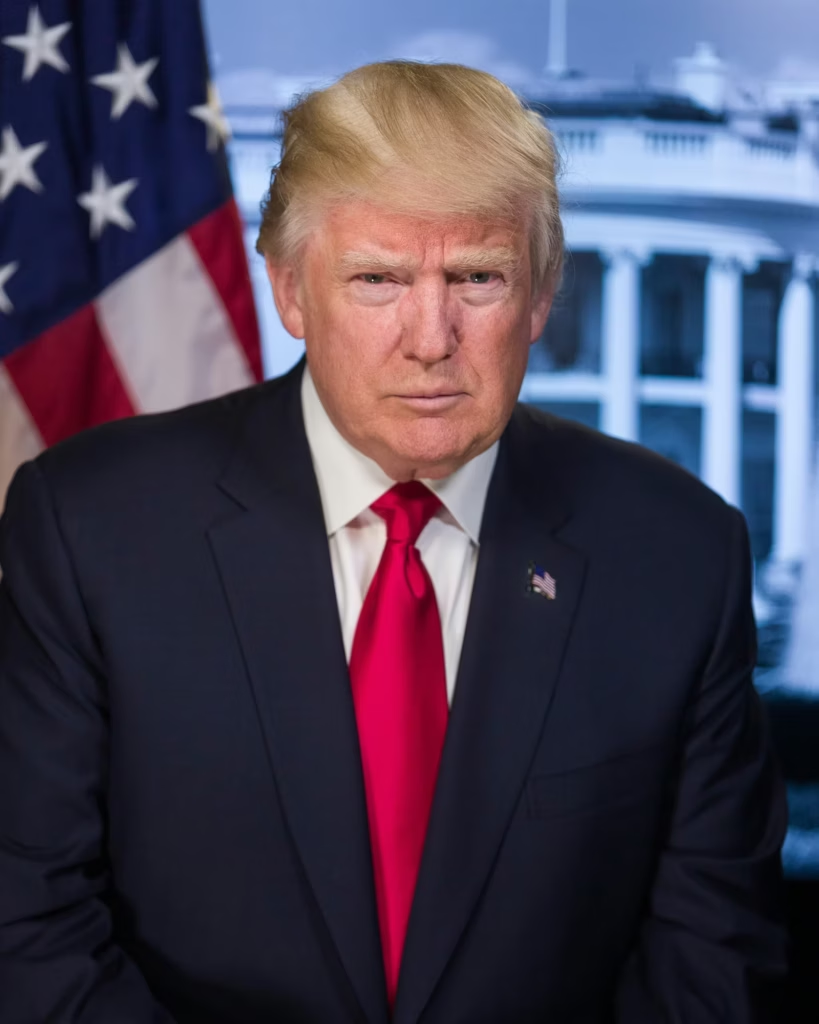
Donald Trump has now called on Congress to implement a one-year 10% cap on credit card interest rates to tackle the rising cost-of-living and affordability crisis in the United States, aiming to reduce borrowing costs for consumers given that he lacks the authority to impose such a cap by executive order. Following a long, unsuccessful fight to persuade the federal reserve to cut borrowing costs, he argues that the measure would prevent Americans from being “ripped off” by credit card companies charging interest rates of 20-30%. The proposal also aligns with Trump’s broader election strategy, aiming to address voter concerns about the rising cost-of-living ahead of this year’s congressional elections, where borrowing costs are expected to be a key issue.
Credit unions, however, strongly oppose the plan, warning that it would undermine a vital source of revenue for the industry. Experience shows rigid interest rate caps rarely lower costs for consumers, but tend to restrict access to affordable financial products, particularly for those most reliant on credit. Because credit cards are a form of unsecured lending, major banks such as JPMorgan and Citigroup have warned that interest rate caps would undermine their business models. This could make it unviable for them to lend to certain high-risk borrowers or lead banks to withdraw credit from consumers with lower credit scores, potentially leaving many existing cardholders without access to credit altogether and contributing to a slowdown in economic growth for the US.
However, buy-now-pay-later (BNPL) providers such as Klarna, have expressed support for Trump’s proposal. Unlike traditional credit card issuers, BNPL firms typically offer short-term, interest-free or low-interest repayment options, strengthening their competitive positions, as consumers priced out of traditional credit cards may increasingly turn to these alternative financing options.
At this stage, a major lobbying campaign in Congress is anticipated, not only over whether an interest rate cap should be introduced, but also over whether 10% is an appropriate level. However, the situation remains highly speculative and the next steps are unclear. If the cap were to materialise, law firms would likely see increased demand across several areas: transactional and restructuring work to help financial institutions redesign credit products, revise contracts or exit certain consumer segments and support for alternative financing providers which could expand as traditional credit becomes less accessible, as well as advisory work guiding banks and credit providers on compliance with any new rules.
Sources: BBC News, FT, Reuters, Electronic Payments Coalition
Writer: Jemima Lines
Editor: Olivia Eliadou

Trump Proposes Credit Card Cap
•





Leave a Reply