In February 2025, Hayden Davis created and released $LIBRA, a ‘memecoin’ that attracted a surge of popularity and a rapid rise to around $5 (a market capitalisation of $4 billion), before crashing below $1 over five hours. Predictably, the fiscal consequences for most who had placed trust in the currency were severe. ‘Memecoins’ are cryptocurrencies marketed through internet trends or public figures but are distinctly unreliable and economically erratic.
Critically, the populist, anarcho-capitalist, libertarian president of Argentina – Javier Milei – has been accused of a fraudulent role in this alleged ‘rug pull scheme’. (i) Milei posted an alleged endorsement of $LIBRA on X, portraying it as a tool to stimulate ‘economic growth’. The post was deleted within hours. While a single post may seem banal, such an action by a president with 3.8 million followers could be a striking abandonment of fiscal responsibility. (ii) There is suspicion of a covert meeting between Milei and Davis, just as (iii) it is unclear who received a $1,275,000 payment from Davis before $LIBRA’s release (as reported by El País). Milei and his administration have fiercely defended his actions and resisted the investigations.
Commercial dimensions & contextualisation
It is no novelty that populists engage in organised hypocrisy or – in other terms – chaos by design. Yet, if credible, the hypocrisy of Milei’s reckless promotion of this memecoin, given budget cuts, dismantling of the welfare state, inflation, and a self-made image of economic heroism, is particularly pronounced. It may show the corrosive effect of populist politics on developed economies.
In such hands, social media can shift from social trend to economic weapon. Despite the complexity of global economic systems, major damage can result from a single post.
The spectre of ‘memecoins’: variations on a theme
The threat posed by cryptocurrencies may have been thoroughly overlooked. Several leaders have not merely flirted with crypto but woven it into national economies. For example, populist Nayib Bukele in El Salvador passed a Bitcoin Law and enacted plans to make bitcoin national currency, build bitcoin ATMs, distribute it via ‘Chivo Wallet’, and convert state resources into bitcoin. Much of this was driven by social media.
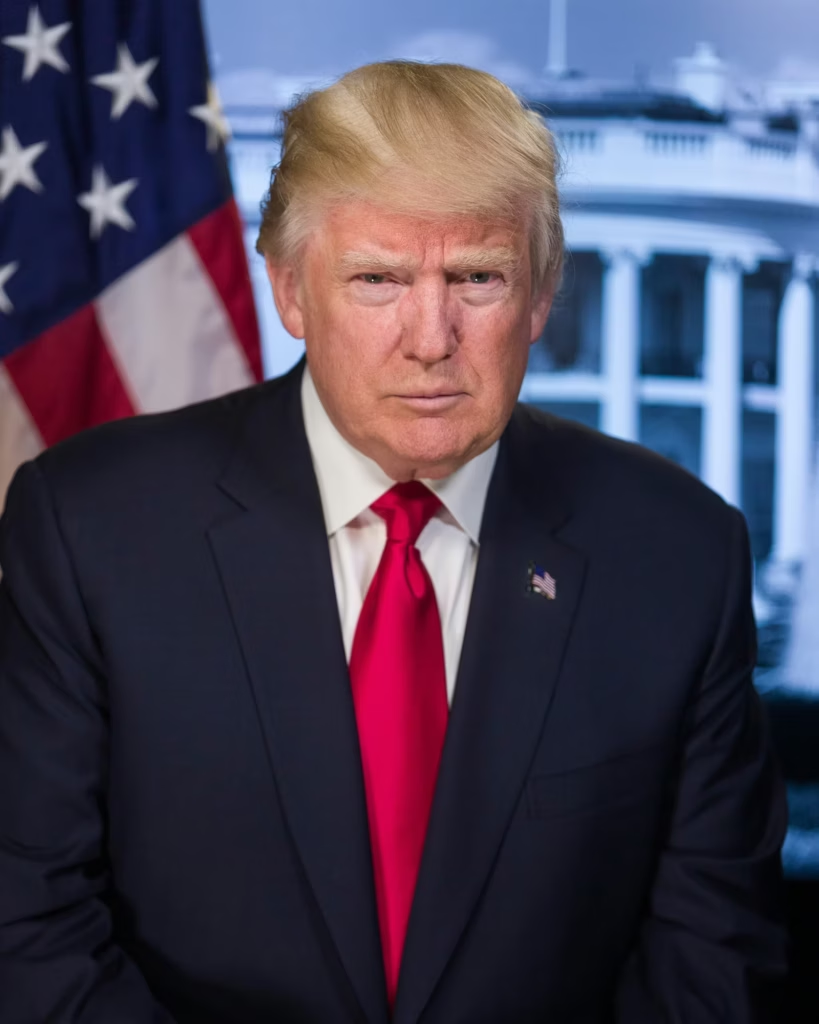
Similarly, Trump in the USA declared aims to be the ‘first “crypto president”’ and turn the US into the ‘“crypto capital of the planet”’ (Reuters). He denied links to the $TRUMP memecoin – which rose to $14.5 billion before falling – despite one group tied to its origin being owned by Trump himself.
This is not anomaly, but a recurring theme. Memecoins combine the ridiculous and the dangerous. The $LIBRA scandal may be an early symptom of a deepening link between populism, social media, and cryptocurrency—with profound legal and commercial consequences.
Written by Luca Povoas
Sources: Forbes, The Guardian, New Yorker, FT, Reuters