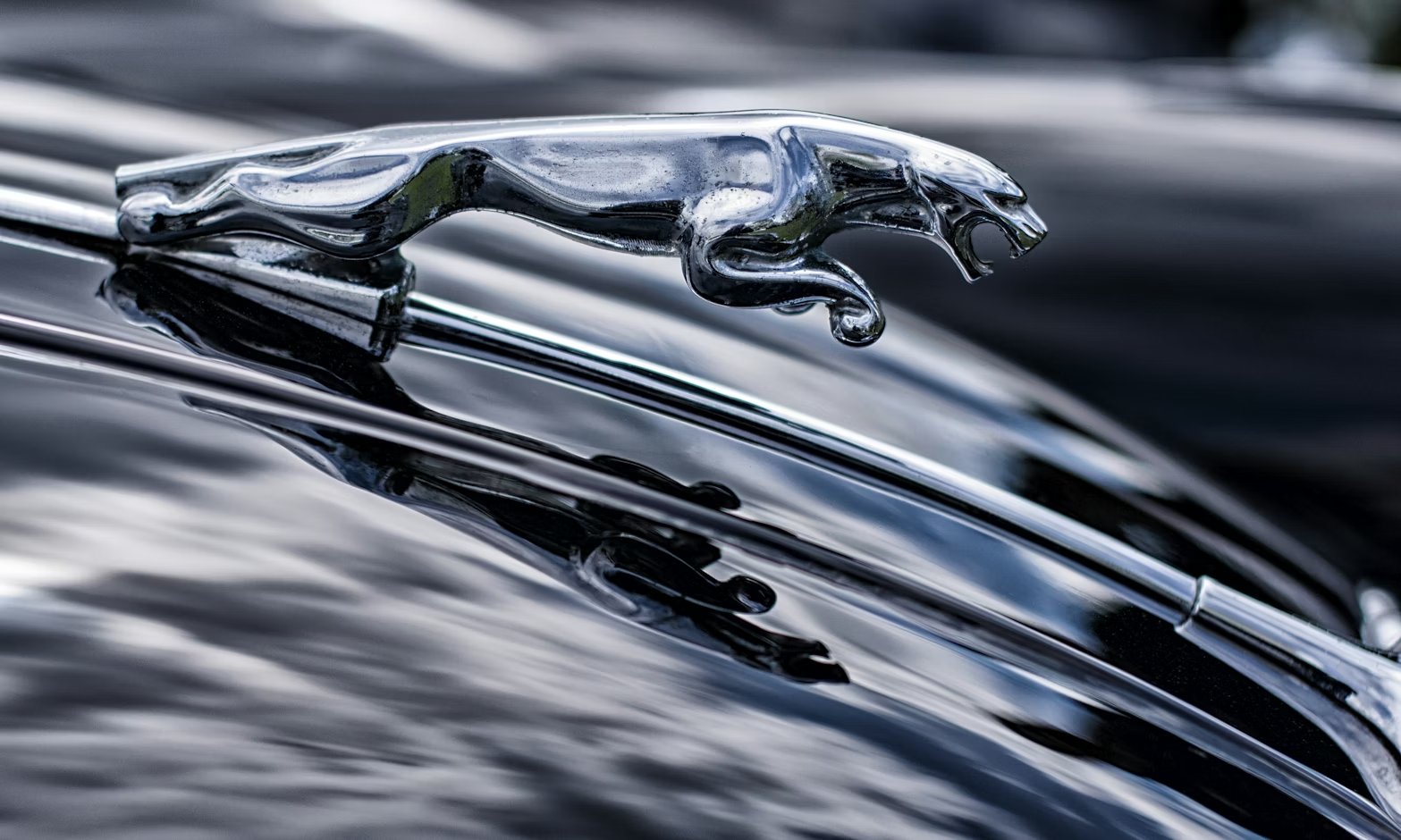
Having already undergone a significant decline in profits following a cyber-attack in August, Jaguar Land Rover is expected to suffer further losses which may have an indirect effect on the UK economy. In September, the government announced a support package for Jaguar Land Rover with a loan guarantee unlocking up to £1.5bn in bank lending which would support the car giant’s supply chain, displaying their ongoing commitment to boosting the UK auto sector as part of the ‘Plan for Change’. The impact of the August 31st hacking
situation is now proclaimed to be largely over by the British company, but further supply-chain disruptions have been predicted due to a dispute at key automotive chipmaker Nexperia.
Dutch chipmaker Nexperia has suspended supplies to its Chinese subsidiary, the Dongguan plant, which has triggered a trade tensions that may impact production for car makers globally. Prior to the dispute, many Nexperia products made in Europe were imported to China for packaging and distribution. Although Nexperia is looking for new avenues to prevent this disruption, including potentially shipping products to a smaller factory in Malaysia, given that the company ships more than 100 billion products a year, car companies has already led to shortages to companies which may worsen if left unresolved. Jaguar Land Rover’s chief financial officer Richard Molyneux predicts potential further economic issues caused by the dispute.
The UK government promoting and supporting industries is crucial to the health of the UK economy, but it also raises significant questions. The Jaguar Land Rover situation highlights how there is a delicate balance to be reached. Critics such as UK Export Finance chief executive Tim Reid have warned that this sort of deal falls outside of the ‘normal underwriting criteria’, particularly because Jaguar Land Rover reportedly failed to take out appropriate cyber security insurance.
Therefore, although the deal was created to protect a vital part of the British economy (the auto industry) it also risks increased exposure for the government. With its upcoming launch of the electric Range Rover next year, it is hoped that the firm will escape this economic upheaval. However, if Jaguar Land Rover fails to stabilise itself financially, there is a small risk that its debt may impact the government and, consequently, the UK taxpayer. As the ethics of such government loans continue to be debated, the UK government will need to mitigate the risk in issuing loans to such industries alongside the need to promote them in order to avoid economic shock.
Sources: The Guardian, The Financial Times, gov.uk
Image: Unsplash
Written by Zara Lawrence
Edited by Olivia Eliadou